Torque Pivot Point . The pivot point is at o. And different torque magnitudes will produce different rotational behaviors. Solved Exploration 2 Torque For An Object Free To Rotate from www.chegg.com Conversely, the less force applied, the less the torque will be. A uniform log that’s a hundred feet long seems pretty unlikely in the wilderness!. Figure 10.31 torque is the turning or twisting effectiveness of a force, illustrated here for door rotation on its hinges (as viewed from overhead).
Torque Movement In Orthodontics. The centre of rotation of a tooth is at the incisal edge in case of root movement. Also, it refers to the amount of twist applied to an arch wire in bracket engagement or activation.
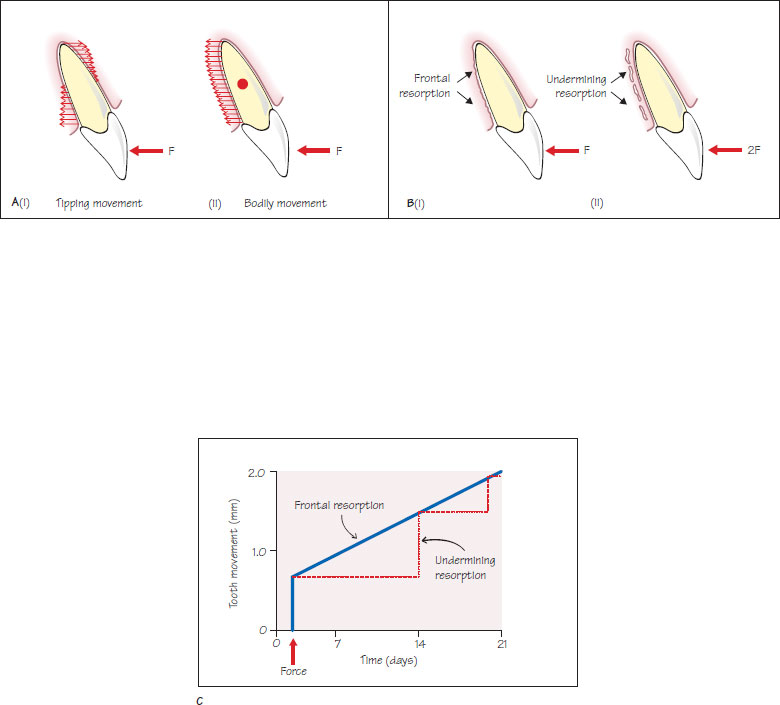
35 The biology of tooth movement Pocket Dentistry from pocketdentistry.com
The aim of this study was to assess the relative influence of the material of the orthodontic appliance (adhesive, bracket, ligature, and wire) on tooth displacements and developed stresses/strains after torque application. Torque is the force that enables the orthodontist to control the axial inclinations of teeth and to place them in the harmonizing positions that are so desirable for a nicely finished result. Also, it refers to the amount of twist applied to an arch wire in bracket engagement or activation.
In This Video, We Look At The Different Types Of Orthodontic Tooth Movement, As Well As Forces, Moments,.
This basic concept is better understood if the role of moment to force ratio is known. Lingual orthodontics has developed rapidly in recent years; Despite the advent of numerous treatment philosophies, appliance.
Torque Movement Is Frequently Needed In Orthodontic Treatment, Which Needs A Thorough Understanding A Biomechanical Principles.
Torque is the force that enables the orthodontist to control the axial inclinations of teeth and to place them in the harmonizing positions that are so desirable for a nicely finished result. Proper buccolingual inclination of both posterior and anterior teeth is essential to providing stability and proper occlusal relationship in orthodontic treatment. Biomechanics of torque torque or root movement of a tooth is achieved by
Torque Is Defined As The Twisting Of A Structure About Its Longitudinal Axis, Resulting In An Angle Of Twist.
11,12 if the position of cr is clearly determined during orthodontic treatment, tooth. Also, it refers to the amount of twist applied to an arch wire in bracket engagement or activation. Torque of the maxillary incisors is particularly critical in establishing an esthetic smile line, proper anterior guidance, and a solid class i relationship, because undertorqued anterior teeth can preclude the retraction of.
T Orque Correction Is One Of The Most Difficult And Critical Procedures Performed During The Finishing Phase Of Orthodontic Treatment.
This is the most desirable type of tooth movement in orthodontic treatment. In root torque, the center of rotation is at the incisal edge or at the bracket with a 12:1 moment to force ratio. Biomechanics of torque torque or root movement of a tooth is achieved by keeping the crowns stationary and applying a moment to force only to the root.
Both The Crown And Root Move In The Same Direction Either Labially Or Lingually The Same Amount Of Distance.
The centre of rotation of a tooth is at the incisal edge in case of root movement. Torque can be produced by using rectangular wire or using torquing auxiliaries. Therefore, until the archwire fills the slot, a considerable percentage of the torque built into the bracket is lost because of the play between the archwire and bracket slot ( burstone et al.


Comments
Post a Comment